Arcology: A Delicate Introduction
V1

“The city is gone. Transmuted into the roots of something yet to come”
The story begins like this. Like all machinic stories before, in the excesses brought by the desert.
The year is 1970. Shovels have broken the unbaked earth seventy miles north of Phoenix. Here, an Italian American architect would go on to develop the latest in a series of utopian conceptualizations in 20th-century urban planning.
What would transpire in this desert would be a turning point in how humans conceive their relationship with the space all around us, whether artificial or natural, rural or urban. More specifically, it would bring the “Western” world a word by which it could begin to orient and capture the edges of possibility: the Arcology.
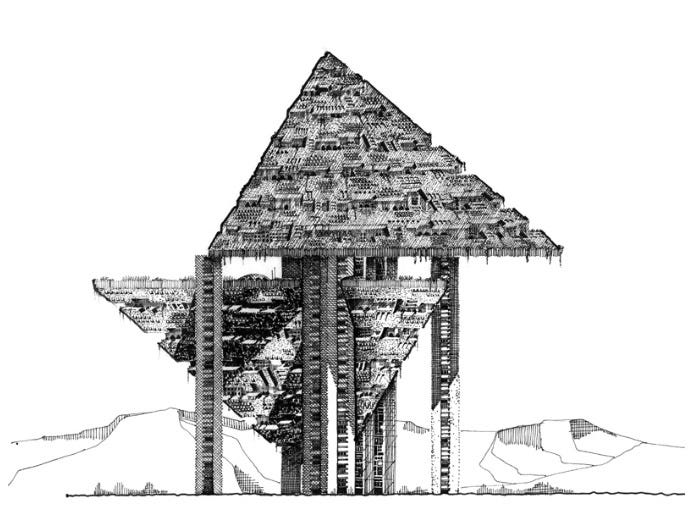
The concept of arcologies, which has manifested itself all the way from fictional stories to real-life proposals, is part of a long stream of idealized cities and utopian projects that have been ceaselessly conceived and attempted for centuries. Many of these now only remain in the imaginations of architecture undergrads and the writing of prospective science fiction authors.
When we hear this word, we tend to think of a few things: a large building, a self-contained community of the future, either utopian in concept or dystopian in practice, depending on the works in which it appears.
However niche these may have become, we would challenge any claims that such proposals are being tossed aside as irrelevant. In many such cases, what we retain from history might carry within it the caked dust of unwanted temporal residues. As we write these words, many new urban developments are not only being conceptualized but are also reaching the early stages of actualization. Many of these developments also carry the term "Arcology," either by their designers or by those commenting on their creation.
As a broader point, ideas are not just inert; they can live beyond the time and context in which they originated. We can think of them as having half-lives. We often forget that the words we use to describe the world carry unexamined premises or assumptions, depending on our relationship to them. Ideas used casually to define our actions might lead us to miss the flaws hidden between symbols.2
As a result, new Megaprojects are making headlines and capturing the imagination without question, such as The Line in Saudi Arabia, which has now broken ground despite the concerns raised by its many detractors and critics. Nevertheless, the project appears to be showing no signs of stopping.
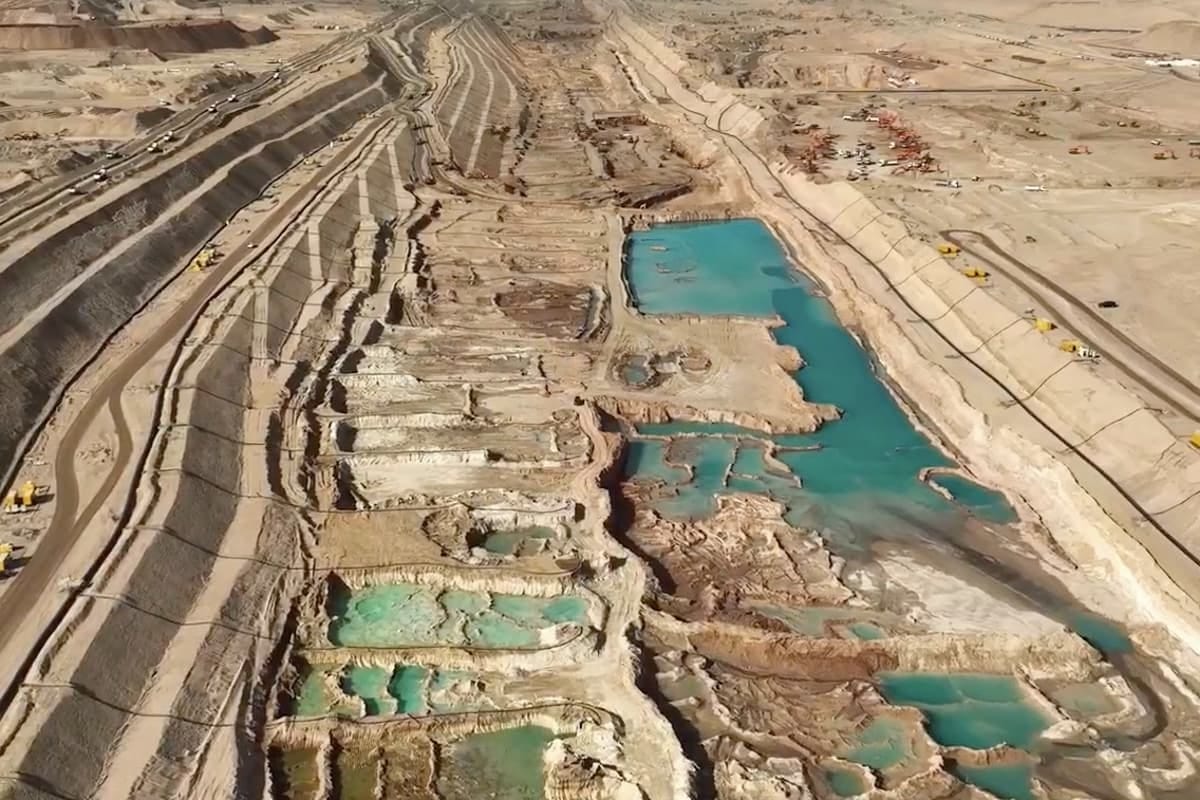
The Line has drawn the ire of several international organizations, such as the ALQST. With particular concern given to the treatment of workers on the site, the displacement of indigenous peoples living in the region, and the significant environmental impacts this development would bring. The climate is a key concern here, as, in the face of increasingly devastating climate catastrophes, The Line has been (like many similar projects) designed to address all the ills of the current age. Its proponents are resolute in their insistence on the dream behind this city, believing it to be a “…a sustainable city with zero emissions that plans to tackle the big urban challenges faced by the world.”
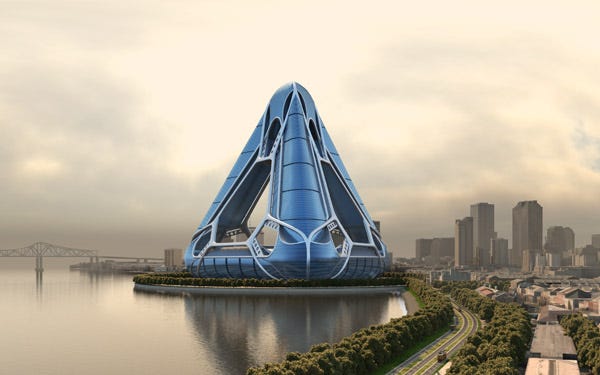
These projects are not exclusive to the Arabian Peninsula. Other proposals have been brought forward in the Americas as well. Like their Arabian counterparts, these structures often present themselves as the playthings of Oligarchs looking to flex political influence in a given city, such as in New Orleans with the proposed site of an Arcology on the bay.4
Combined with the idea of Charter Cities (urban cities in designated special administrative and economic zones), you have a recipe for the return of company towns: anarco-capitalist amusement parks with little community oversight or the capacity to withstand any conditions the shareholders impose on them.
Is it any wonder then that now, only recently, the Trump administration, which is now on a trajectory to privatize his nation’s economy further, has been approached by investors and entrepreneurs who are interested in exploring these very ideas?5
“Many of the industries Allen says he hopes to foster in Freedom Cities–energy, nuclear, semiconductors, and defence technology–are, not coincidentally, ones “a lot of venture [capital] is going towards” as funding moves away from SaaS, digital, and internet consumer brands.”
These are not the first of such projects. Utopia is just too great a temptation to throw away. Ideas such as these have existed in a dormant state in our collective imaginations for decades, waiting for the right climate and sufficient capital flows to flourish. Are we comfortable seeing our cities become the playgrounds of oligarchs? Are we willing to accept their half-measures to tackle the real social ills millions of urban humans face?
This essay is for all. It concerns the planners and architects who cultivate the dreams of cities and beauty, to those who dream of better worlds, those who feed and shelter those in need, those who call themselves progressive, futurists, socialists, anarchists of many stripes and none, guerrilla gardeners, dreamers, makers, and so many more.
This essay will attempt a daunting task. Therefore, it would need to be done in multiple sections, which we will refer to as volumes. We will begin our investigation by tracing the historical path that has led to the conception of the arcology. In doing so, we will apply our analysis to the properties of these designs and how they reflect the properties expected by their creator. Often, it can be argued that they are expressions of desires and memetic symbols seeking to manifest themselves through such engagements.
The second part will address the Arcology itself. This will require a closer examination of the concept as it was proposed and how it has been implemented. By critically examining the genealogy of the utopian projects before and contemporary with the development of the term Arcology, we will attempt to highlight the uninvestigated assumptions and conceptions carried within. Assumptions which allow for the conceptual space necessary for the structure to emerge and replicate itself through the aforementioned symbolic mimesis.
The concluding section will be the most foolish part of the essay. Building on the critical approaches of the preceding two, we propose a new paradigm for nurturing future urban spaces and unlocking the promise that Arcologies hold for the future. This will involve laying down ideas and theories that not only address the critiques we have previously raised but also work through them to build the framework necessary to retool this concept and address previously unexamined issues.
Let us be clear: we are not attempting to create a fully formed genealogical timeline of these ideas, but rather to chart a series of lines of flight, which will lead us to develop flawed models and establish a firmer foundation for any further constructs.
Illustration of the proposed Arcvillage I. Arcology: The City in the Image of Man. Paolo Soleri. MIT Press.
Negarestani, Reza. On Philosophical Scaffolding and Triangulation. (video) 26 Oct 2021. The New Center for Research and Practice.
https://newatlas.com/architecture/line-saudi-arabia-neom-progress/. Video reveals progress of 170-km-long skyscraper through Saudi desert. Adam Williams. (Video) Feb 27th, 2024.
https://medium.com/@aydin.j.zubair/noah-the-grand-dream-of-a-floating-city-that-never-quite-sailed-5ee681b647b4
https://www.wired.com/story/startup-nations-donald-trump-legislation/